
- PANA

- Mar 10, 2022
Updated: May 26, 2022
Wait times for nurses were among the longest in much of the U.S.
This article was originally published by WITF/Transforming Health
Brett Sholtis MARCH 10, 2022 | 5:00 AM
(Harrisburg) — More than half of the 12,000 nurses issued licenses to work in Pennsylvania last year waited for three months or longer to get them, according to an NPR data analysis. Health care groups say the failure to promptly certify nurses added to a critical staffing shortage during some of the worst months of the coronavirus pandemic.
The excessive wait times for registered nurses and licensed practical nurses were among the longest in the 32 states where data was available. Wait times increased significantly from 2020 to 2021.
The data show a snapshot of Pennsylvania’s overburdened licensure system, which the state nursing association and area health systems say reduced health care workers’ ability to adequately deal with surges of patients sick with COVID-19.
“They’re emotionally exhausted, they’re physically exhausted, we add to that the frustration of not being able to get your license, and then what happens, you don’t even get your license,” said Betsy Snook, CEO of the Pennsylvania State Nurses Association. “Now you can’t even work…you’re at the mercy of the state board of nursing.”
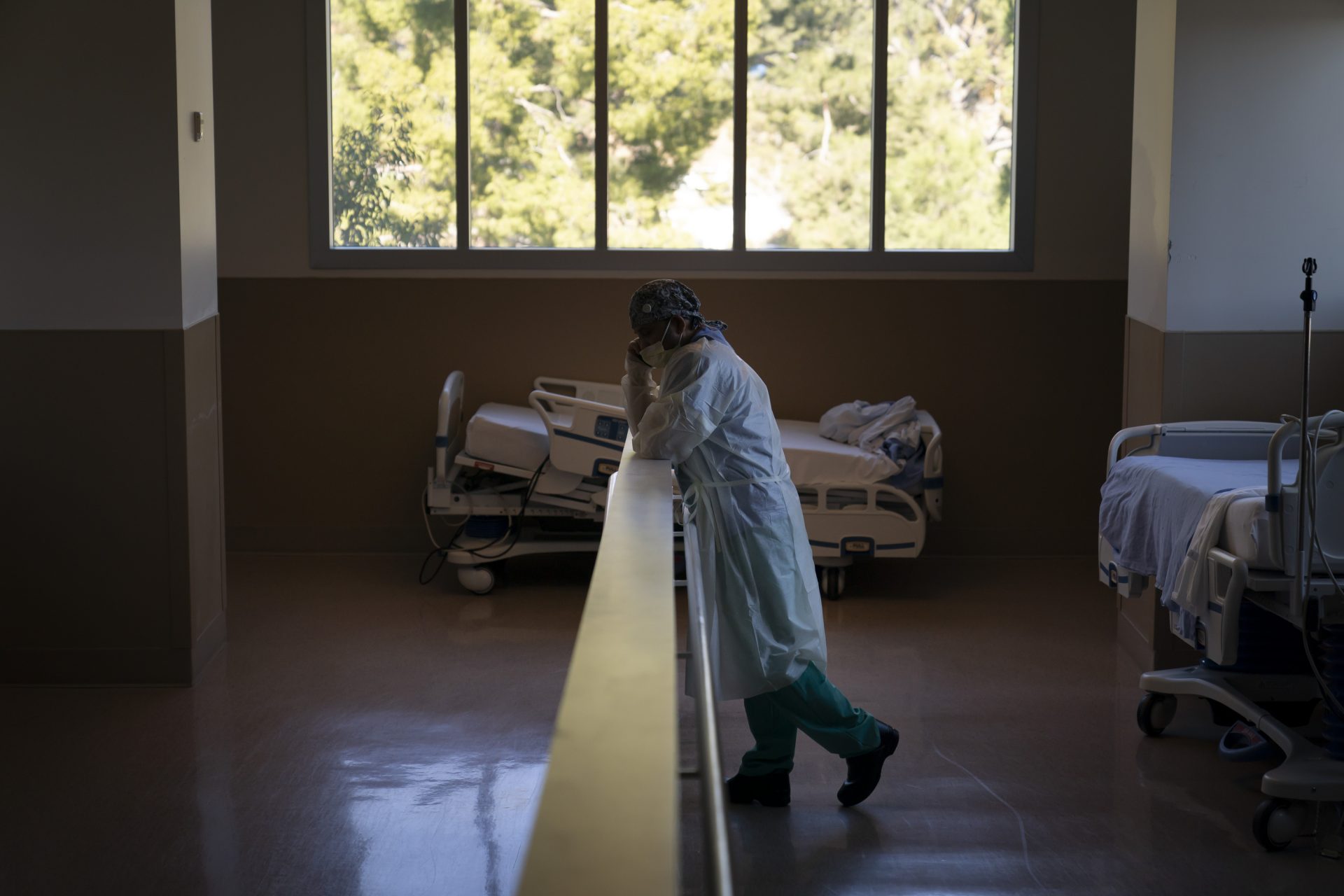
The Pennsylvania Department of State, which oversees the nursing board, says the pandemic affected its operations, and it has responded as quickly as it could. It says wait times have since improved to between 12 and 15 weeks. Data show that range still exceeds wait times in many other states. The department says Pennsylvania’s licensure process is more transparent than in most states, resulting in longer waits.
The Department also notes that temporary licenses have helped deal with the issue. However, board records show thousands of temporary licenses issued through the pandemic will soon expire. The department says the state no longer has the power to extend those temporary licenses, a result of last year’s change to the state constitution that limits the governor’s ability to make or renew emergency orders.
Throughout some of the worst surges of COVID-19 cases last year, nurses who could have helped were stuck on the sidelines.
It took more than three months for 55% of the nearly 12,000 registered nurses and licensed practical nurses issued licenses to get them from January through late September 2021, data show.
Among the 32 states NPR examined, about 35% of nurses waited at least three months for a license last year. That’s well below Pennsylvania’s rate.
NPR’s analysis shows other states had much faster median times — for example, 30 days for RNs moving to Illinois and 65 days for new RNs taking the nursing exam in Ohio. The median is the middle number in a list, meaning half the nurses had a shorter wait, while half waited longer.
NPR found Pennsylvania processed LPN applications more slowly than any other state and was among the slowest at issuing RN licenses last year.
New registered nurse licenses issued in Pennsylvania in 2021
Wait times have increased sharply for nurses moving into Pennsylvania from other states, known as “endorsement” applications. In 2020, the nursing board approved them in 57 days, on average. In 2021, the median time grew to 90 days — about 13 weeks.

Notes
Data includes records from January through September. This chart does not include nearly 400 nurses whose licenses took longer than 48 weeks to process.
Source: Pennsylvania Department of State
Credit: Connie Hanzhang Jin and Austin Fast/NPR
Approximately 4,000 registered nurses, who provide direct care for patients, were issued Pennsylvania licenses during that nine-month period in 2021 as they moved into the state. They faced a median wait time of 90 days, data show. Similarly, more than 6,000 people who got their RN licenses after passing their boards had a median wait of 97 days.
Licensed practical nurses, who help doctors and RNs care for patients, faced worse circumstances during that period. LPNs saw a median wait time of 126 days for nurses already licensed in other states and 111 days for those who just passed their exams. About 1,700 LPNs were in these groups.
For some nurses, the waits were much longer.
Reeny Pereira was already an experienced registered nurse in Maryland when she applied for a license in Pennsylvania in mid-July.

Pereira said she was surprised to learn she would have to wait 12 weeks to get her license, but she didn’t mind. The newly-married 29-year-old was about to move to Bethlehem, had a honeymoon coming up and had enough money saved to take a few weeks off. With hospitals desperate for nurses, she assumed there would be a priority to get her licensed.
It was while on her honeymoon in Jamaica in late August that the board of nursing emailed her to inform her that it needed her to submit a copy of her Maryland state employment background check — and as a result, she would have to wait another 12 weeks.
Over the next two months she called the nursing board’s call center innumerable times. Average hold times were an hour or longer, she said. And when she opted to put in a “ticket” for a call back, her issue wasn’t resolved, and she’d have to start all over again.
In November, after being on hold for an hour to learn why she hadn’t gotten any update on her application, a call center worker told her she would have to wait for another 12 weeks.
“That’s when I lost it,” Pereira said. “I asked if I could talk with a manager and he said no, and that’s when I hung up.”
When Pereira got off the phone, she emailed the governor to let him know that nurses who wanted to work were stuck waiting while COVID-19 raged and hospitals struggled. She got an automated reply in return.
As weeks passed and her frustration mounted, she considered taking a job at a vaccine clinic in Maryland. She even considered taking a temporary job at Costco or as a babysitter. Ultimately she did none of those. The vaccine clinic job would have required her to find housing and be separated from her husband, and anyway she didn’t want to take a job only to quit weeks later.
The week before Christmas, a recruiter at a local hospital suggested Pereira apply for a temporary license. This is something Pereira might have done in the first place, had she known that a 12-week wait would turn into five months. Still, she emphasized, nursing board call center employees had never suggested this as an option. Desperate to get back to work, Pereira paid another $70 for that license, on top of the more than $300 she spent to apply for her permanent license.
On January 7, her temporary license was approved. Several hours later — five months and three weeks after she applied — her permanent license was approved, and she promptly took a job with a travel nurse staffing agency.
For Pereira, there’s a huge disconnect between what hospitals need and what the board is providing. “And that made me angry, because the state really needs nurses and yet you’re delaying us to even work there,” she said.
The Pennsylvania Department of State, which oversees the nursing board, wasn’t asked to comment on specific cases. Spokeswoman Ellen Lyon said that many delays in licensure are caused by nurses overlooking documents in their applications.
“This missing information can delay processing up to eight weeks as the applicant collects the information and submits it to the Board or contacts the source and arranges for the documentation to be submitted to the Board,” Lyon said.
Had Pereira applied for a temporary permit sooner, she likely would have been quickly approved. However, according to the Pennsylvania State Nurses Association, there was widespread confusion around this process.
The nurses’ association fielded calls from dozens of nurses worried as they got toward the expiration of their temporary license, said its president, Betsy Snook. Those nurses couldn’t get in touch with the board to ask about their permanent license.
For Kelleigh Eckenrode, working in Pennsylvania wasn’t worth dealing with the bureaucracy — or the wait.

Eckenrode is a registered nurse with 10 years experience already licensed in Connecticut, Massachusetts and California. Like Pereira, she’s also licensed in Maryland—which is one of the states that is part of an agreement between states called the nurse compact. As a result, she is able to work in other states that are part of the compact, and has done so extensively.
Pennsylvania has joined the compact, but its membership is not active yet, so when Eckenrode decided to work in the commonwealth to be closer to her nieces and nephews, she had to apply for a license.
The post-anaesthesia care unit nurse applied in early August and was told to expect a four-to six week wait. After being unemployed for four weeks, and not wanting to go any longer without working, Eckenrode took a travel nurse assignment in North Carolina.
Four weeks later, the 36-year-old wrapped up that assignment and returned home. Eight weeks after she applied, she still didn’t have her Pennsylvania license.
Eventually, Eckenrode got tired of calling the state’s customer service line. She had recently renewed her license in California, and when a lucrative offer came in to work in San Francisco in early December, she decided to pack her bags.
About a week later, on December 15, Eckenrode’s Pennsylvania license was approved. It had taken 18 weeks.
Eckenrode plans to come home to Pennsylvania in March to visit family. But since her employer asked her to stay on for another 13-week contract, she plans to return to San Francisco to work.
For Eckenrode, the problem starts with the state’s licensure call center.
“I just felt like it could have been handled better,” Eckenrode said. “When I called, nobody had any sense of urgency or really cared, which is kind of surprising to me knowing that we need nurses everywhere. It was just a little disappointing.”
Though the Pennsylvania Department of State points to its system of temporary licenses as a way to offset long wait times, in some cases, the waits are so long that the temporary licenses expire before the permanent licenses are granted.
The state dealt with this problem by waiving the expiration dates on the temporary licenses. However, that waiver will expire at the end of March, meaning thousands of nurses working under temporary licenses could suddenly not be allowed to work.
Here the department’s power is limited by a voter referendum proposed by the GOP-controlled state legislature and passed by voters last May, Lyon noted. That effort, which many saw as a rejection of perceived overreach by the Wolf administration during the pandemic, changed the state constitution to limit a governor’s power to enact emergency orders.
“The Department of State no longer has the authority to grant waivers or amend/extend existing waivers due to passage last May of a constitutional amendment giving the Legislature the sole authority to extend disaster declarations declared by the Governor,” Lyon said. “And in this case, the Legislature chose not to extend the disaster declaration.” A nurse who holds a temporary permit that’s about to expire may apply for an extension, Lyon noted.
Even as the state promises to shorten its wait times, there are likely to be longer-term repercussions to the licensing delays and resulting nursing shortage. The most recent report from the federal Health Resources and Services Administration has estimated that Pennsylvania is projected to have a shortage of 18,700 LPNs by 2030, second only to Texas.
Pennsylvania health systems are already feeling the effects. About one in four nurse jobs were vacant last November and December, according to a recent survey of more than 240 hospitals by the Hospital and Health System Association of Pennsylvania.
Average nurse license processing times by state in 2021
Dots represent each state’s median processing time, where exactly half of the nurses’ applications were processed faster and half took longer. Endorsement applications are nurses licensed in one state who reapply in a new state. Exam applications are typically new graduates getting their first license.
See How Your State Compares in this analysis.
Notes — Analysis covers records from January to September 2021. — Connecticut and Virginia did not provide nurses’ application types in the same format and cannot be included above. — *Louisiana only provided LPN records. — **West Virginia and Wyoming only provided RN records.
Source: NPR analysis of records provided by licensing boards in 32 states Credit: Connie Hanzhang Jin and Austin Fast/NPR
At Geisinger Health System, staffing agencies like the ones Pereira and Eckenrode work for are helping to lower that number, said chief nursing officer Janet Tomcavage. Still, the rate of unfilled positions is more than twice what it was before the pandemic.
Ultimately, it’s the patients who feel the effects, Tomcavage said.
“Delays in getting nurses to the bedside to care for patients requires our current staff to work significant overtime, adding to burnout and further loss of nurses. It also requires hospitals to hire more agency staff, which drives the cost of healthcare higher, and in many cases closes down beds that cannot be staffed.”
f
She said the state nursing board and the legislature understand the problem. “I do believe that folks have listened, but we still are experiencing delays.”
Staffing challenges due to licensing delays are affecting Penn State Health as well, according to Sheilah Borne, associate vice president of governmental health relations.
Still, the nursing shortage is not new, said Michele Szkolnicki, the Hershey-based health system’s senior vice president and chief nursing officer. It’s best understood as a complex problem made worse by the pandemic.
Baby boomers have already begun retiring, and one-third of the nursing workforce is expected to retire in the next 10 to 15 years, Szkolnicki noted.
Meanwhile, nursing schools aren’t accepting enough students, Szkolnicki said. According to the American Association of Colleges of Nursing, 80,000 qualified nursing school applicants were rejected in 2019 because of a lack of teaching staff.
COVID-19 surges have “undoubtedly caused increased stress for many nurses and chased them out of the profession,” Szkolnicki said. “This includes the distress caused by watching many unvaccinated persons getting very ill and dying when many of those deaths could have been prevented.”
The shortages have boosted demand for nurse staffing agencies. Nurses such as Pereira and Eckenrode have opted to work for the agencies as travel nurses, where they can earn much more money and often find they face less pressure.

As the pandemic has made the need for prompt licensure more urgent, the Department of State has responded “to the greatest extent possible,” hiring more staff and issuing licensing waivers when possible, said Lyon.
“Even now, we understand that many health care workers are coming to our licensing process already exhausted by two years of overwhelming and often traumatic work,” Lyon said. “As the deadline approaches for many nurses to transition temporary practice permits (TPPs) to full licensure, it is our goal and intention to assist applicants in every way that we can.”
She said the wait times have improved, with an average processing time between 12 and 15 weeks for registered nurses.
Lyon said people shouldn’t compare wait times in Pennsylvania to other states because they use different standards.
She said a survey of other states showed Pennsylvania’s wait times are comparable to those in California. NPR’s analysis found California also had some of the longest wait times in the U.S.


